Another day, another cyber attack making the headlines. From household names and global organisations to businesses closer to home, reports of cyber incidents seem to be everywhere. But is cybercrime really on the rise, and what's driving it?
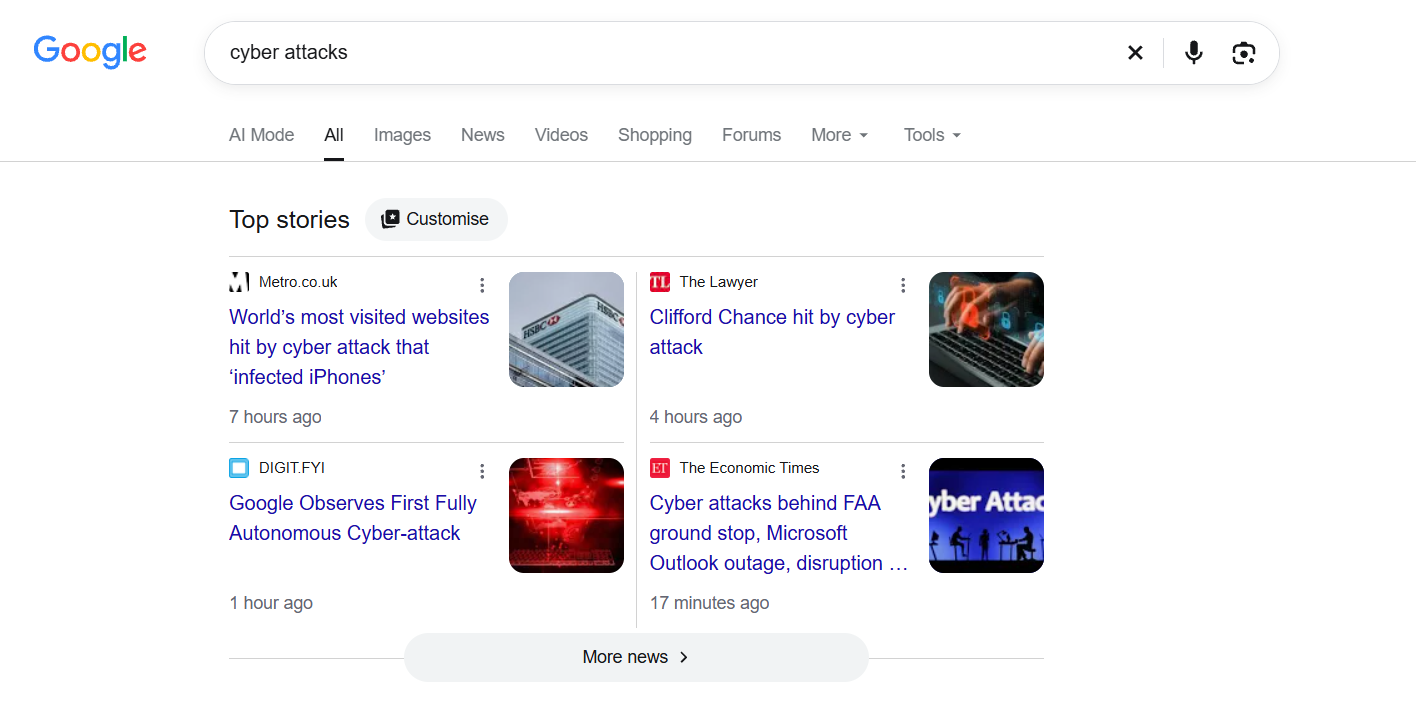
Has anyone noticed that recently it feels like you can't go a day without reading about another organisation falling victim to a cyber attack?
Companies such as Uber and Zoom have been caught up in cybersecurity headlines, while attacks affecting businesses across retail, manufacturing, finance and other sectors continue to make the news.
And it's not just a feeling. Recent figures suggest the UK is experiencing a significant increase in reported cyber incidents. Between July and September 2026, the Information Commissioner's Office (ICO) recorded 1,371 cyber incidents, the highest number reported in a single quarter.
So, what's happening? Why are cybercriminals becoming so active, and why does it seem that even the biggest organisations can't keep them out?
The answer is a combination of factors. AI is changing the way attacks are carried out, cybercrime is becoming increasingly accessible, and businesses are creating more opportunities for criminals as they become increasingly reliant on connected technology.
The short answer is that there are some clear signs of increased activity, although the picture is more complicated than simply saying every type of cyber attack is on the rise.
The latest ICO figures show a record number of cyber incident reports in the third quarter of 2026. Meanwhile, cybersecurity researchers at Sophos reported that more than 1,200 new organisations worldwide were named on ransomware leak sites during October alone.
In the UK, approximately 350 organisations have been named on these sites so far in 2026, around 50% more than during the same period last year.
The National Cyber Security Centre (NCSC) also reported receiving 1,831 reports of cyber attacks affecting UK organisations during its 2025/26 reporting year, with 337 incidents requiring direct support from its incident management team.
It's worth remembering that reported incidents, attempted attacks and confirmed successful breaches are not the same thing. However, the evidence suggests that cyber threats remain a significant and growing concern for organisations.
There isn't one single reason. Instead, several developments are making it easier for cybercriminals to target businesses, carry out attacks and potentially make money from them.
1. Artificial intelligence is changing the game
AI has transformed the way many businesses work, but unfortunately, cybercriminals are finding ways to use it to their benefit too.
Previously, launching a cyber attack would require considerable technical knowledge, time and resources but AI is reducing some of those barriers. Criminals can use AI tools to generate convincing phishing emails, impersonate colleagues, automate research into potential targets and identify weaknesses in systems.
Even the way businesses communicate is being exploited. AI-generated messages can be more convincing, with fewer spelling mistakes, better grammar and language tailored to the recipient.
The NCSC has warned that AI is likely to increase the speed and scale of cyber attacks, particularly as criminals use it to identify and exploit vulnerabilities. This doesn't mean AI has invented an entirely new type of cyber attack. Instead, it's making existing techniques faster, more accessible and potentially more effective.
2. Cybercrime has become a business of its own
When we say the word "cybercriminal", what do you think of?
Most would say some lone hacker in a black hoodie sitting behind a computer looking shifty.
Although that may still be the case for some, organised criminal groups now operate increasingly sophisticated businesses, with different people specialising in different parts of an attack.
One example is ransomware-as-a-service.
This model allows criminals to use ransomware tools and infrastructure developed by others, often in exchange for a share of any ransom payments. In other words, individuals don't necessarily need to develop their own malicious software or have extensive technical expertise to become involved. This has helped create a more accessible criminal marketplace, where tools, stolen credentials and other services can be bought and sold.
As a result, more people can participate in cybercrime, while established criminal groups can focus on targeting organisations and making money.
3. Businesses are more connected than ever
Nowadays businesses rely on technology for almost everything.
From cloud platforms and remote working tools to online payments, customer databases and software supplied by third parties, organisations are more digitally connected than ever.
While this brings significant benefits, it also creates more potential entry points for attackers. A weakness in one system or supplier could potentially expose information or provide access to another organisation. This is known as a supply chain attack. It's a particularly important risk because businesses can invest heavily in their own security but still be affected by vulnerabilities elsewhere in their supply chain.
As organisations become more interconnected, understanding who has access to their systems and how their suppliers manage security becomes increasingly important.
4. There's money to be made
It's no secret that for many cybercriminals, the motivation is purely financial.
Stolen customer information, financial details, login credentials and commercially sensitive data can all have value.
Ransomware attacks are another common example. Criminals can encrypt business systems, steal information or threaten to publish sensitive data unless a payment is made.
An organisation might face lost revenue, operational disruption, recovery costs, reputational damage and the loss of customer trust. For criminals, targeting businesses can be a lucrative opportunity. For businesses, the cost of getting it wrong can extend far beyond the initial incident.
5. Basic security weaknesses are still being exploited
With so much attention on AI and increasingly sophisticated cyber threats, it's easy to overlook something important.
Many successful cyber attacks still rely on relatively simple weaknesses. Outdated software, weak passwords, poorly configured systems and employees falling victim to phishing emails can all provide criminals with an opportunity to gain access. The NCSC continues to highlight the importance of addressing known vulnerabilities and maintaining fundamental security controls.
The technology used by attackers might be evolving, but the importance of getting the basics right still hasn't changed.
When major organisations such as Uber and Zoom appear in the headlines, it's easy for smaller businesses to assume they're unlikely to be targeted.
The reality is that cybercriminals don't always discriminate based on company size. Smaller businesses can be attractive targets because they may have fewer resources dedicated to cybersecurity, less visibility of potential threats and weaker security controls. They can also provide an opportunity to access other organisations through supplier relationships.
And unlike larger companies, smaller businesses may have fewer resources available to recover from a significant incident.
A successful attack could mean losing access to important files, disrupting customer services, exposing sensitive information or bringing day-to-day operations to a standstill. The impact can be significant, regardless of the size of the business.
While no security measure can guarantee that a business will never experience a cyber attack, there are practical steps organisations can take to reduce their exposure and improve their ability to respond.
Keep systems and software up to date
Regular updates aren't just about new features. They often contain important security fixes that address vulnerabilities criminals may already be trying to exploit.
Use multi-factor authentication
Passwords alone aren't always enough. Multi-factor authentication adds another layer of protection, making it harder for criminals to access accounts using stolen credentials. Where possible, businesses should consider phishing-resistant authentication methods.
Invest in effective endpoint protection
Business laptops, desktops and servers all need appropriate protection. Endpoint detection and response solutions can help identify suspicious activity and provide greater visibility of potential threats.
Educate your employees
Your people are an important part of your security strategy. Regular awareness training can help employees recognise phishing attempts, suspicious links, unusual requests and increasingly convincing AI-generated scams.
Review your backups
Backups are essential, but simply having them isn't enough. They should be protected from unauthorised access, regularly tested and kept separate from the systems they are designed to protect.
Understand your supply chain
Know which third parties have access to your systems and data. Review their security arrangements and make sure appropriate controls are in place.
The constant stream of cyber attack headlines is a reminder of how quickly this can happen.
AI is changing the way criminals operate, cybercrime is becoming increasingly accessible, and businesses are facing more complex risks as their reliance on technology grows. But there's an important point to remember: many successful attacks still exploit weaknesses that could have been addressed.
Cybersecurity shouldn't be something businesses only think about when an incident occurs. It needs to be an ongoing priority, supported by the right technology, people and expertise.
At Morgan & Morgan, we help businesses take a proactive approach to their IT and cybersecurity. From strengthening your existing security measures to identifying vulnerabilities and protecting your systems, our team can help you understand where your risks lie and what you can do about them.
You can't always prevent cybercriminals from trying to attack your business. But you can make it much harder for them to succeed.
If you're unsure how well protected your organisation really is, now is a good time to find out.
Get in touch with our team to discuss how we can help protect your business.